I’ve always been a bit curious about the idea of hypnosis, and every once in a while I’d revisit the topic. I never did really know how much of hypnosis is the real deal is how much is nonsense. I’ve tentatively concluded that the idea of an induced trance state is largely real, but the practice often lives in this liminal space between actual science and new age beliefs. Likewise, there are vast differences between clinical and stage hypnosis (I am not yet quite sure how much of stage hypnosis is the real deal).
I was also interested in the idea of self-hypnosis. I saw many discussions online about people reciting their own trance induction scripts to themselves and then playing them back multiple times to try to hypnotize themselves. The goals of the scripts can be anything from alleviating a fear of needles (which I have) to boosting confidence. I’m not sure how well these things actually work.
When thinking of how hypnotizable I might be myself, I was reminded of the talk I attended by Susan Stepney at an artificial life conference many years ago, about open-ended simulations. It focused on novelty. Stepney posited that to be open-ended, a simulation needs to surprise its creator. Of course a hypnosis session is not a simulation, but my mind drew the parallel nonetheless - I strongly suspected that if a hypnosis session had any chance of succeeding on me, I would need it to be unknown/unpredictable to me. Otherwise, I just would not believe it would work, and not believing it would work would immediately lower the chances of entering the necessary state. By thinking about this and deciding it would fail before even trying, I suspect I ensured it would fail.
But I was still curious to learn what being hypnotized might actually feel like. Going to a hypnotist was an option, but not something I was prepared to pay for on a whim, especially since I don’t know how many sessions would be needed to satiatee my curiosity and because I didn’t trust how many hypnotists I’d have to go through to find someone that felt ’legit’ and effective (if any!). Premade recordings are highly impersonal (I’d listened to many while trying to learn more about the topic).
So as an exploration step, I got the idea to build an app for myself that could try to do something in the middle - highly personalized to my own needs, but more accessible than a qualified hypnotist. Of course, the app would be lower quality than a trained human. Therefore I decided to aim not for full on hypnotic trance, but something more like a hypnotic meditation/relaxed suggestive state.
Thus, Eir: Hypnotic Meditations was born!
It’ll take several posts to go through the tech stack in detail, so this one will just be an overview. Eir looks like this:
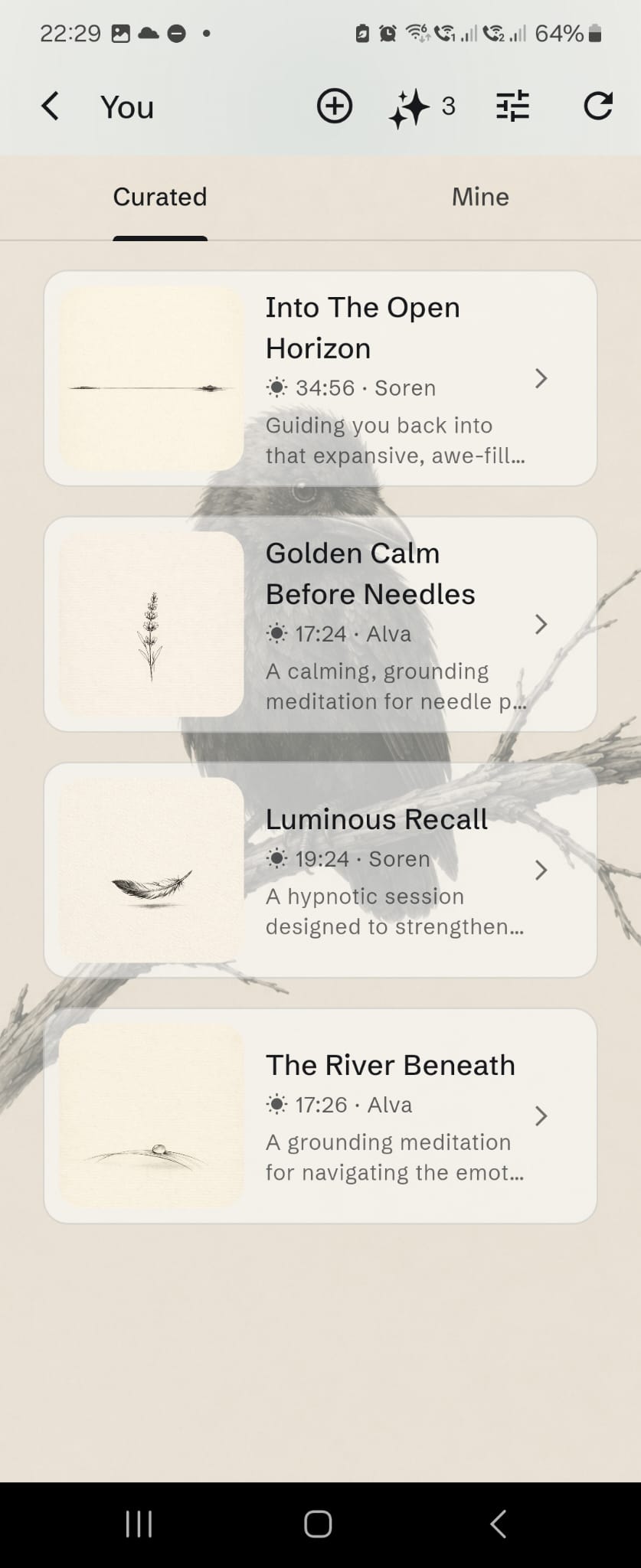
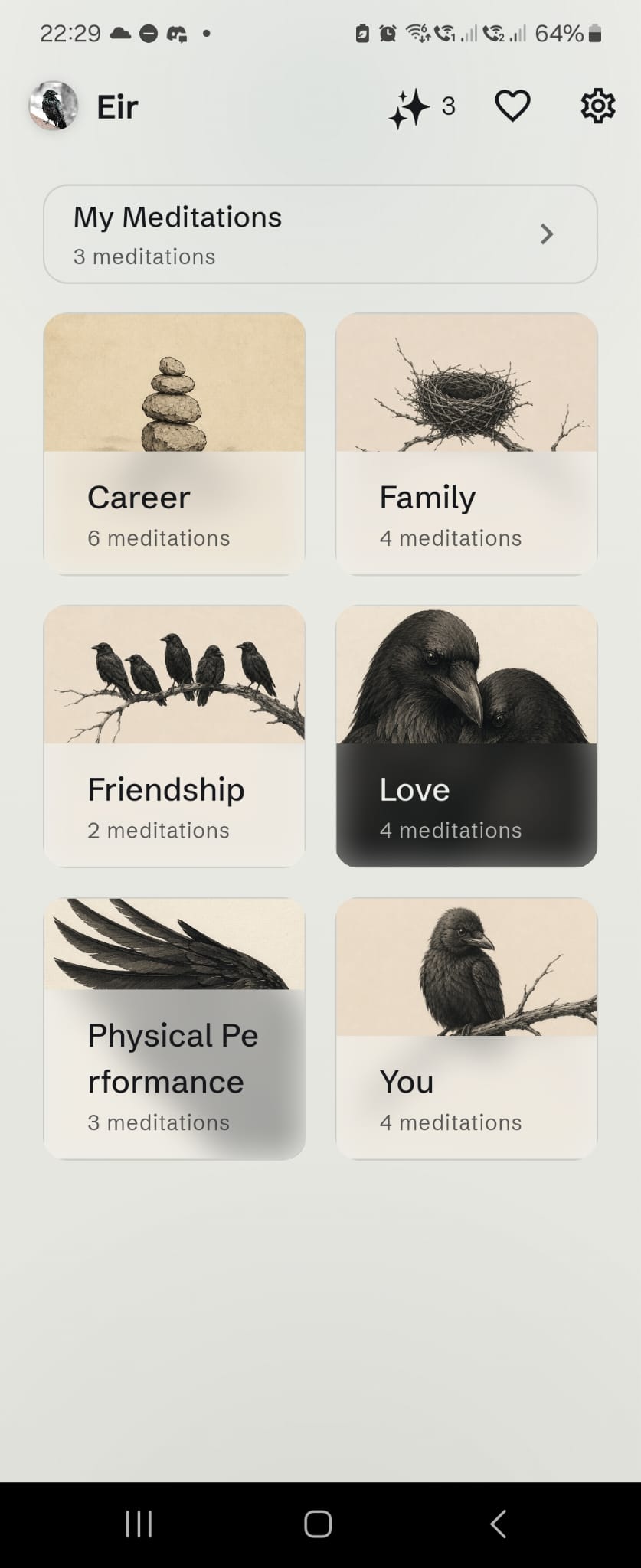
As the user, I can either listen to a number of premade hypnotic meditations or generate my own. I call this hypnotic meditations and not hypnosis, because I am not a hypnotist and to me that is (or should be) a high bar to clear. I’ve been finding the app useful for myself and now believe it works to put me in a certain state of relaxation, but is it ‘real’ trance? No - I’m not prepared to call it that.
The app is obviously super experimental and there is a long list of things to fix and additional issues I’m still discovering. It’s a bit of a fun side project for a target audience of one (i.e., me).
Hypnotic meditation generation
When creating a hypnotic meditation, I can choose to do a quick-create where I answer 5 questions or go through the chat interface, where I can have a conversation with my chosen ‘guide’ about what kind of session I need. The chat interface is the one I use the most.
When going into the chat interface, I pick which guide I want to speak to. Each guide has their own personality and approach. The same guide will also design my session after the chat.
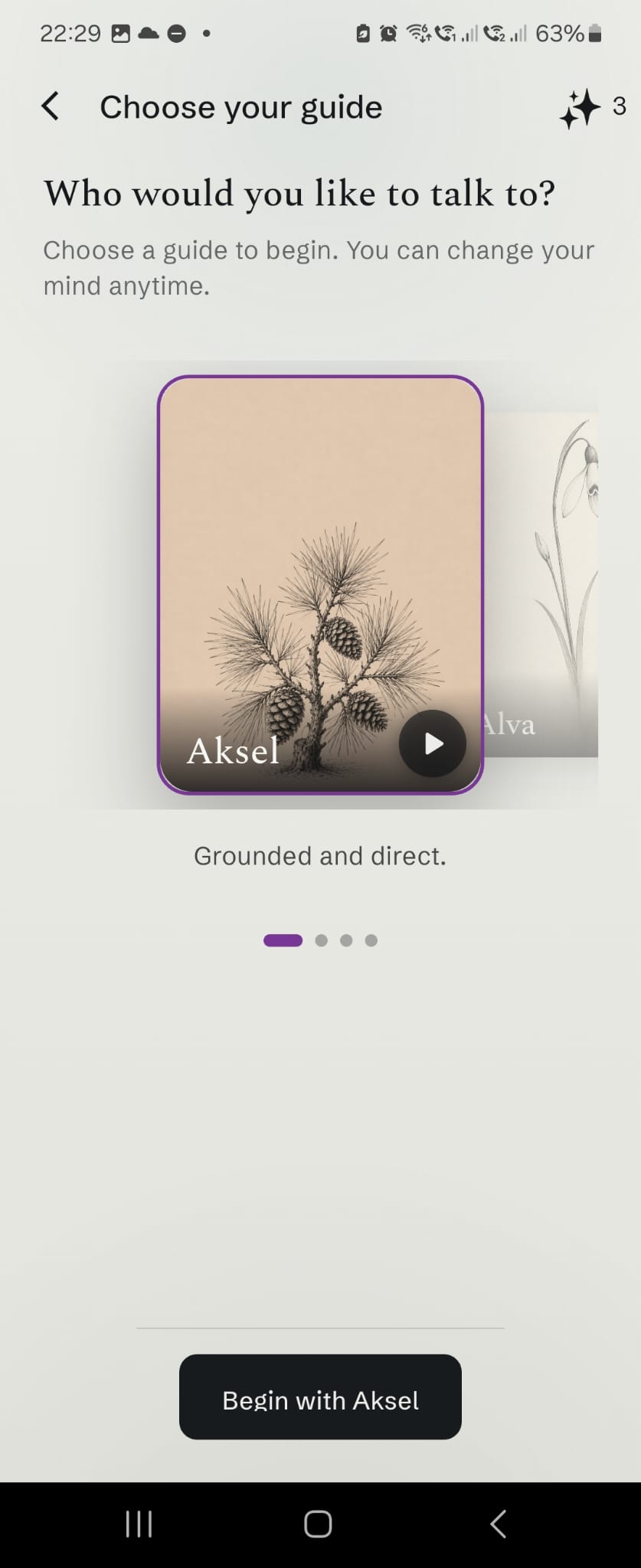
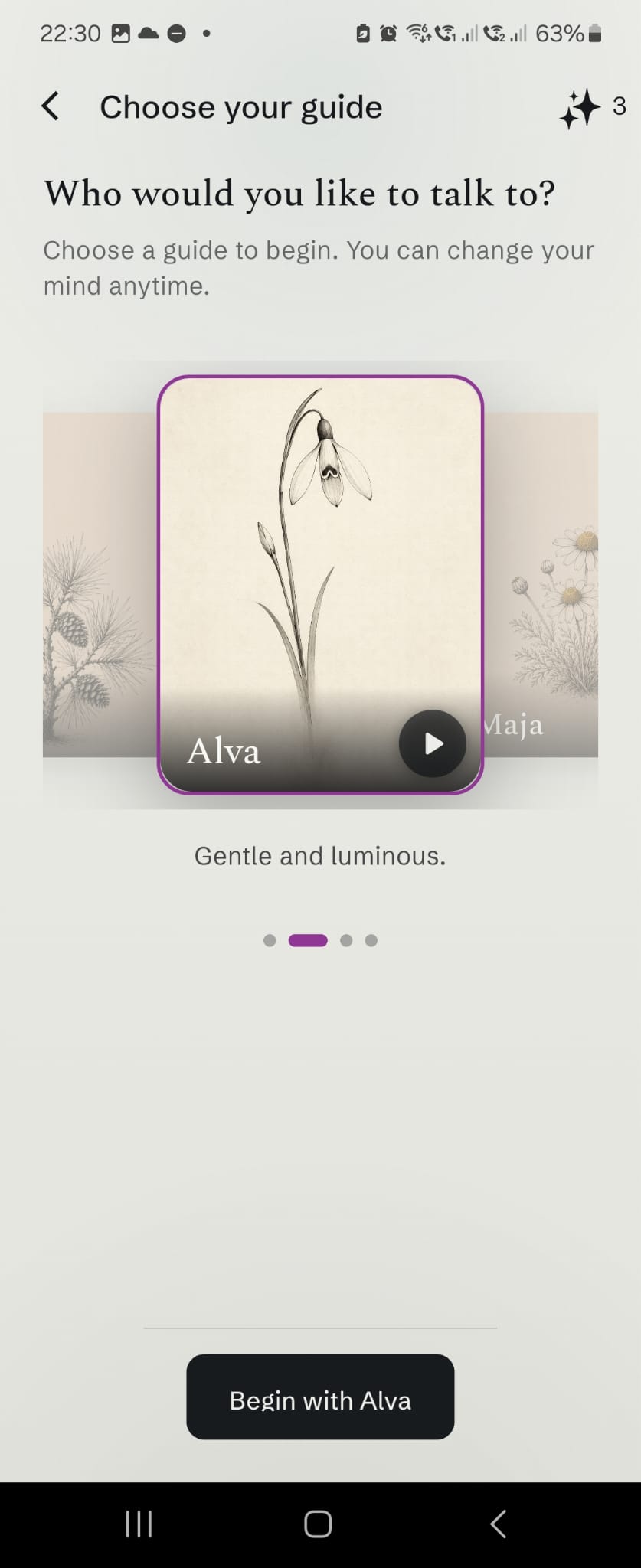
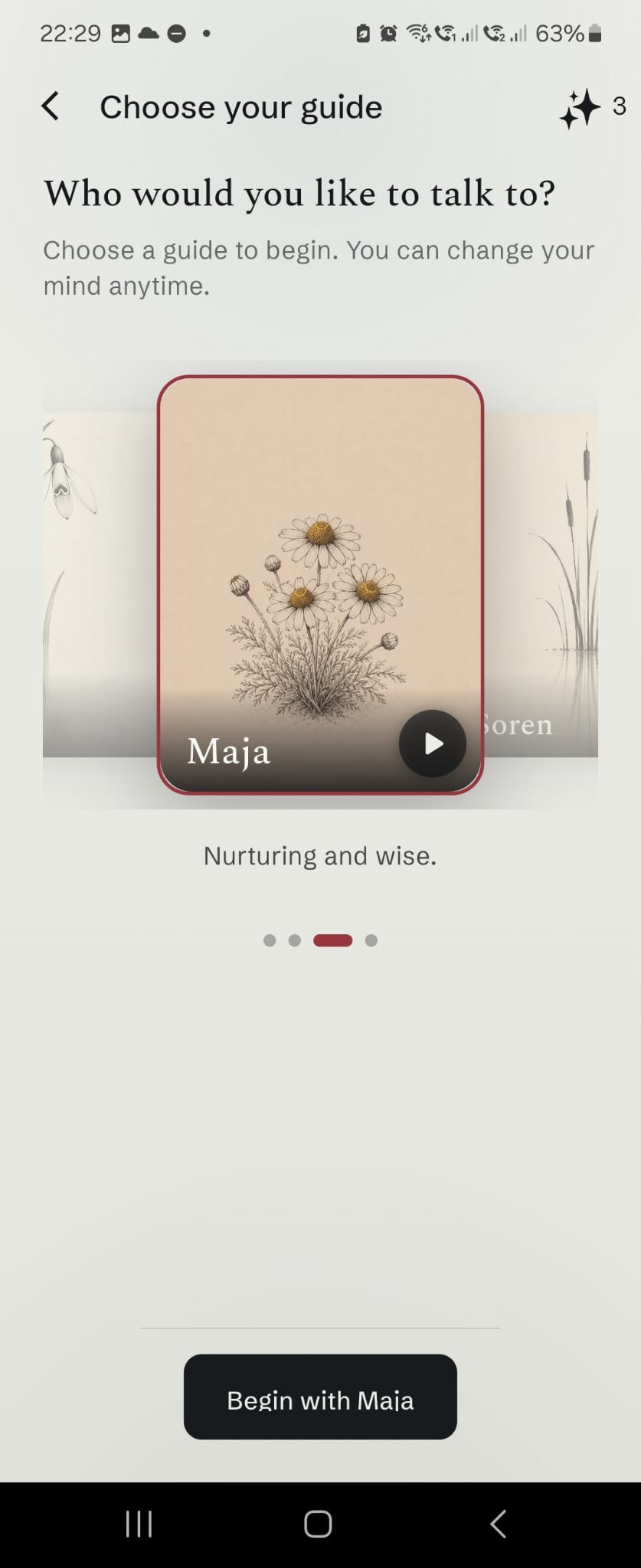
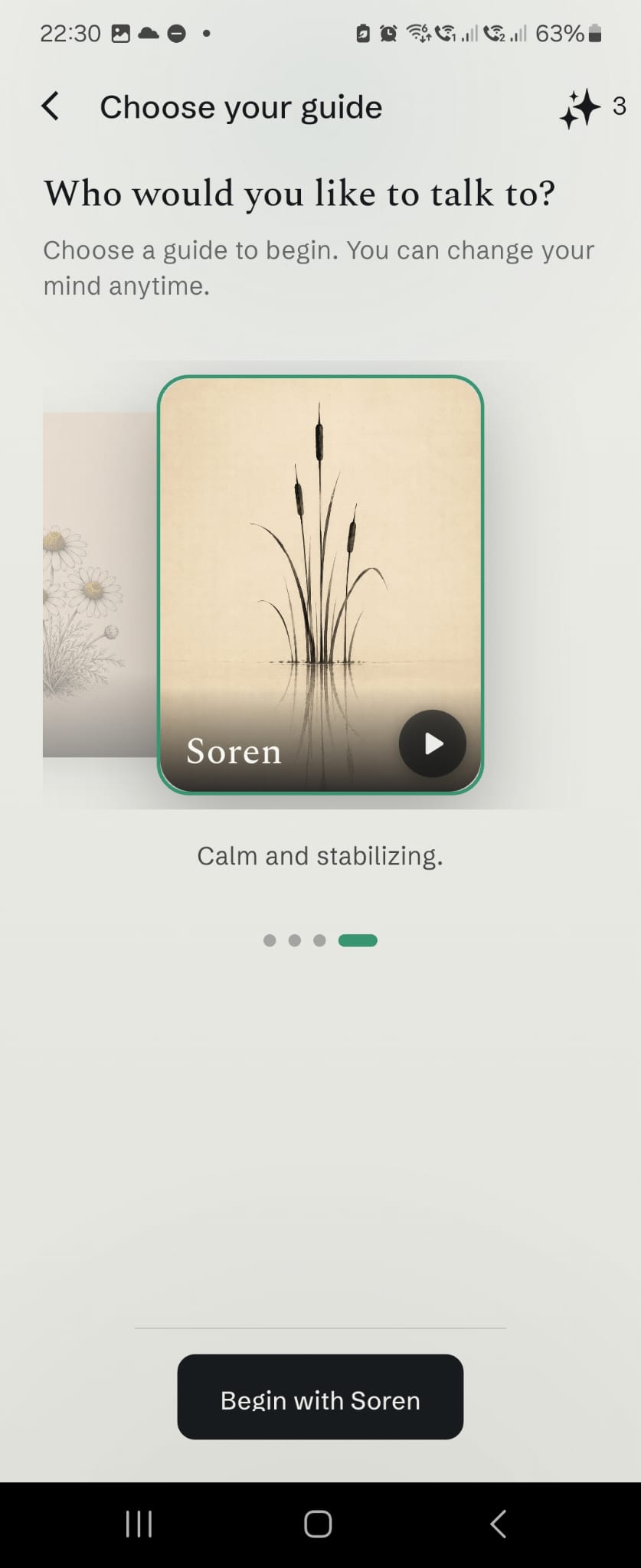
During the chat, the guide asks a few questions about what’s on my mind. With each turn of the conversation it checks whether it has enough information to begin designing the session.
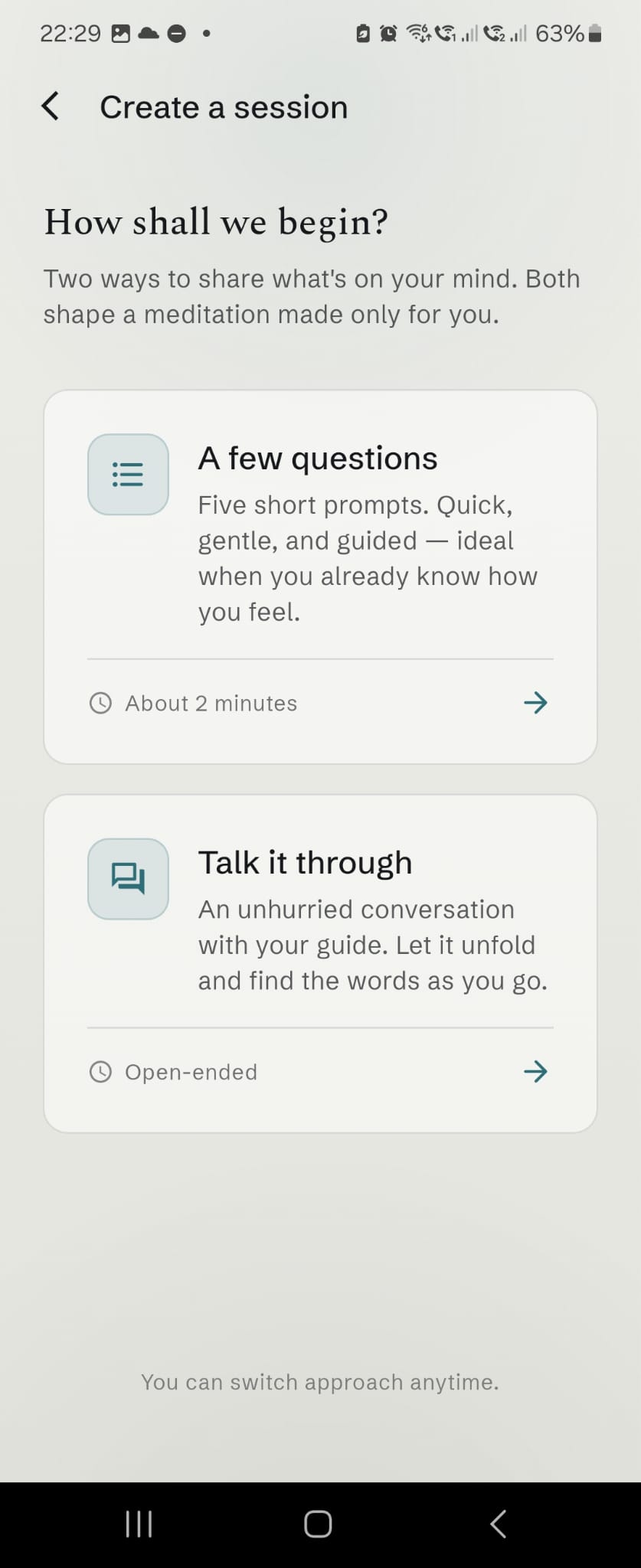
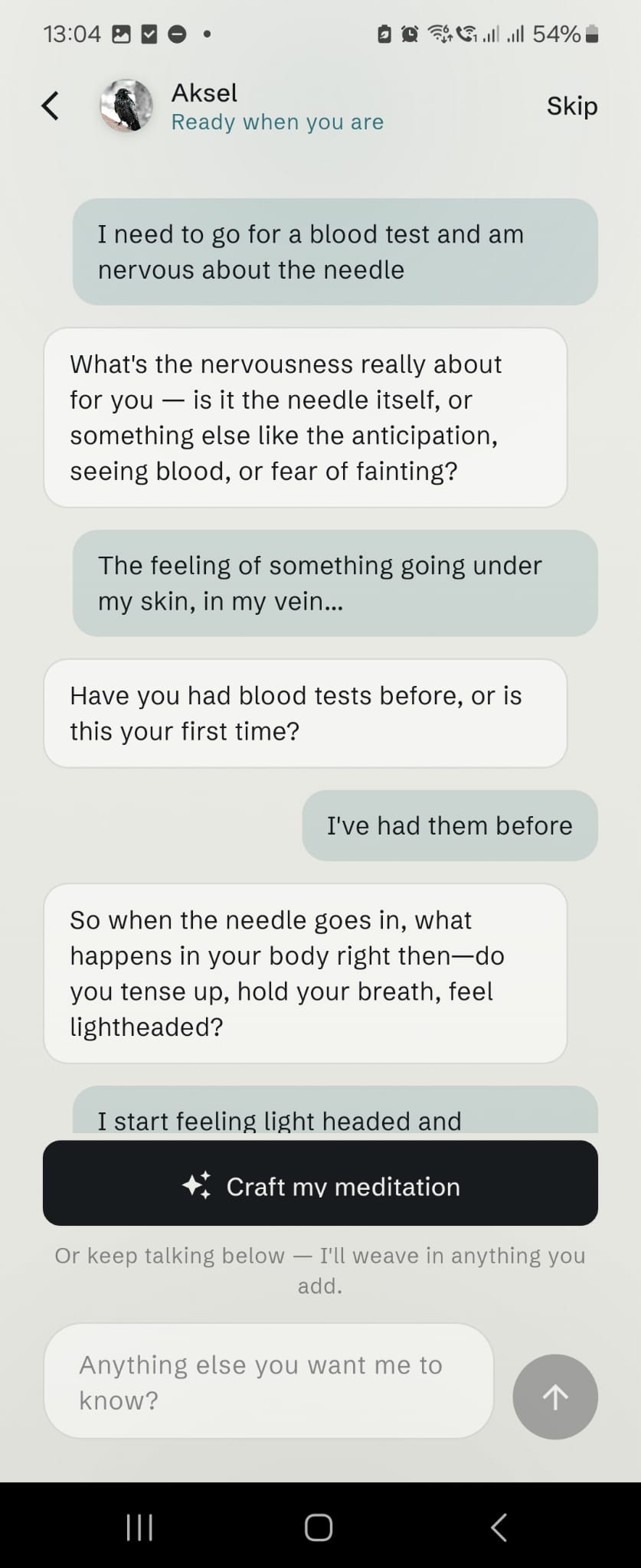
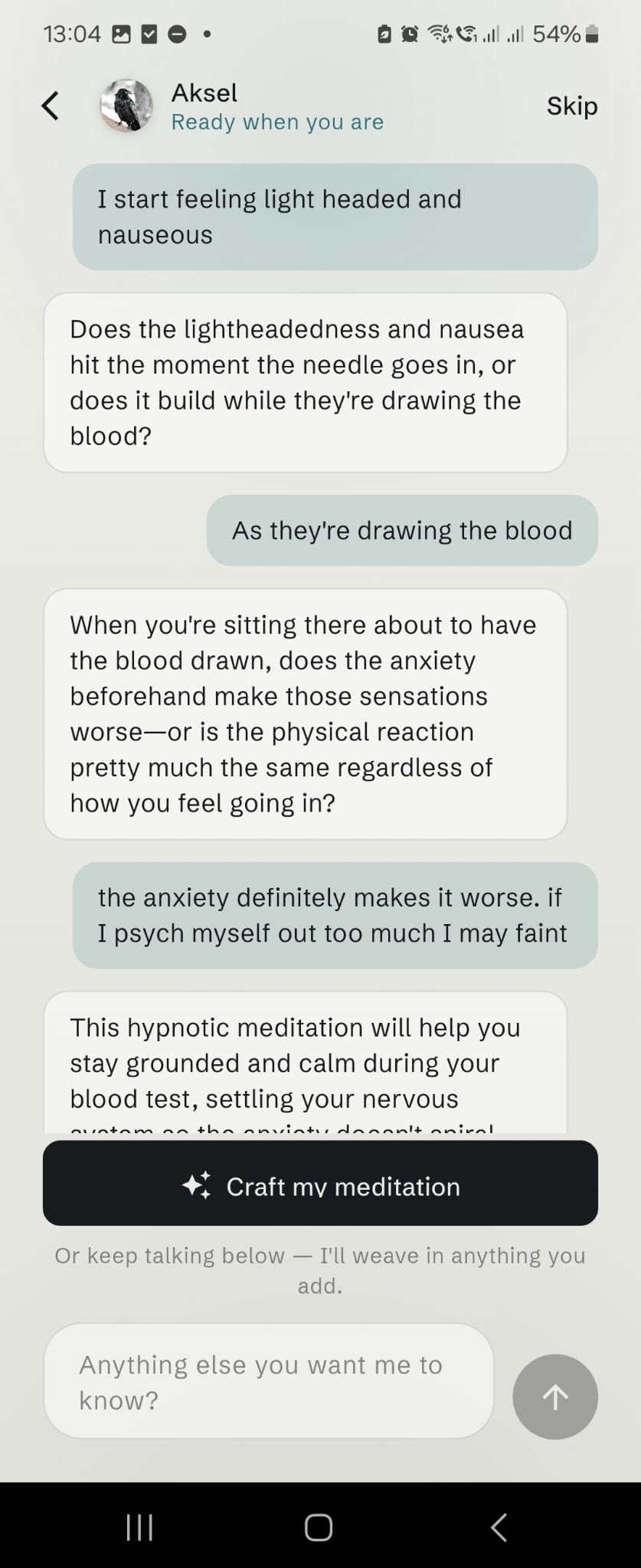
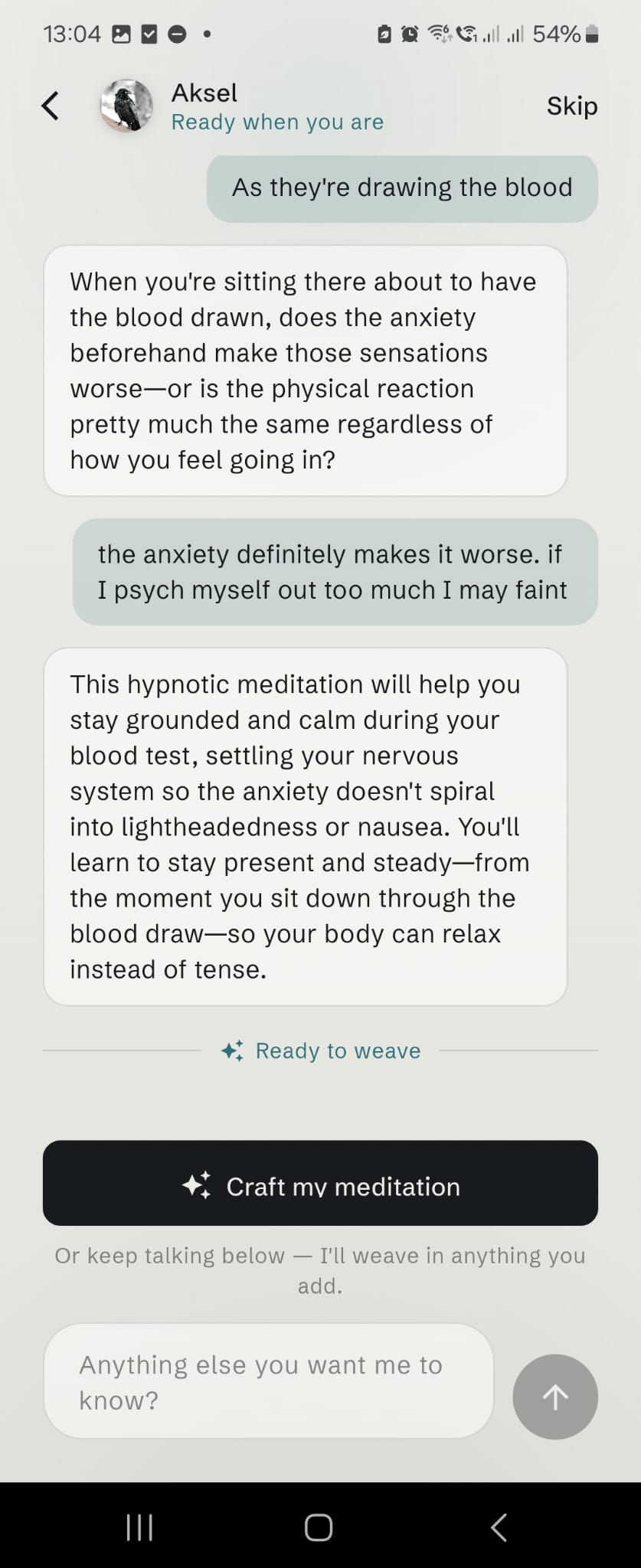
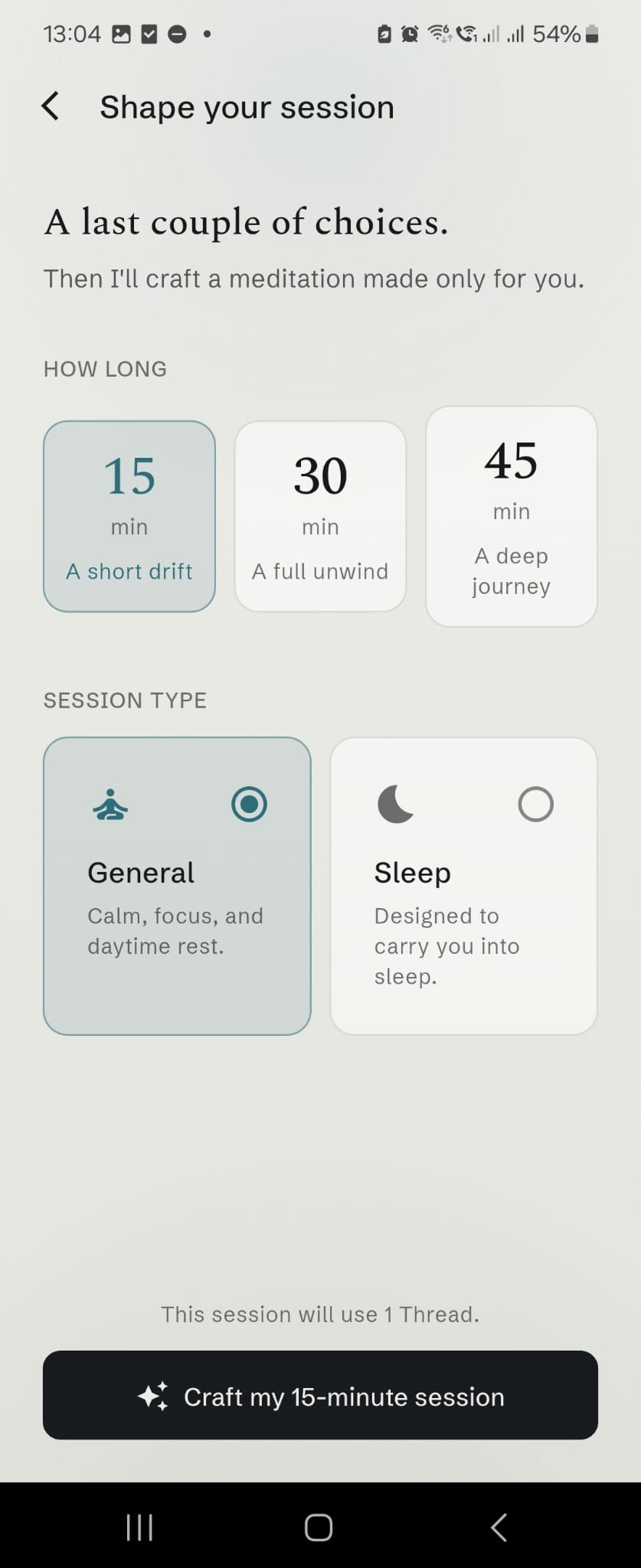
Once enough information has been collected, the guide invites me to go ahead and create the session.
Session design and script generation
The design step consists of first extracting relevant context from the chat transcript. Specifically, we’re looking for things like:
- What the user is experiencing
- The user’s current emotional state
- The user’s current goals or needs
- Any specific concerns
Then, this context as well as the full script are used to search a collection of hypnosis research. Any relevant documents are retrieved. This often consists of things like induction strategies for a specific goal, tested visualization approaches, etc.
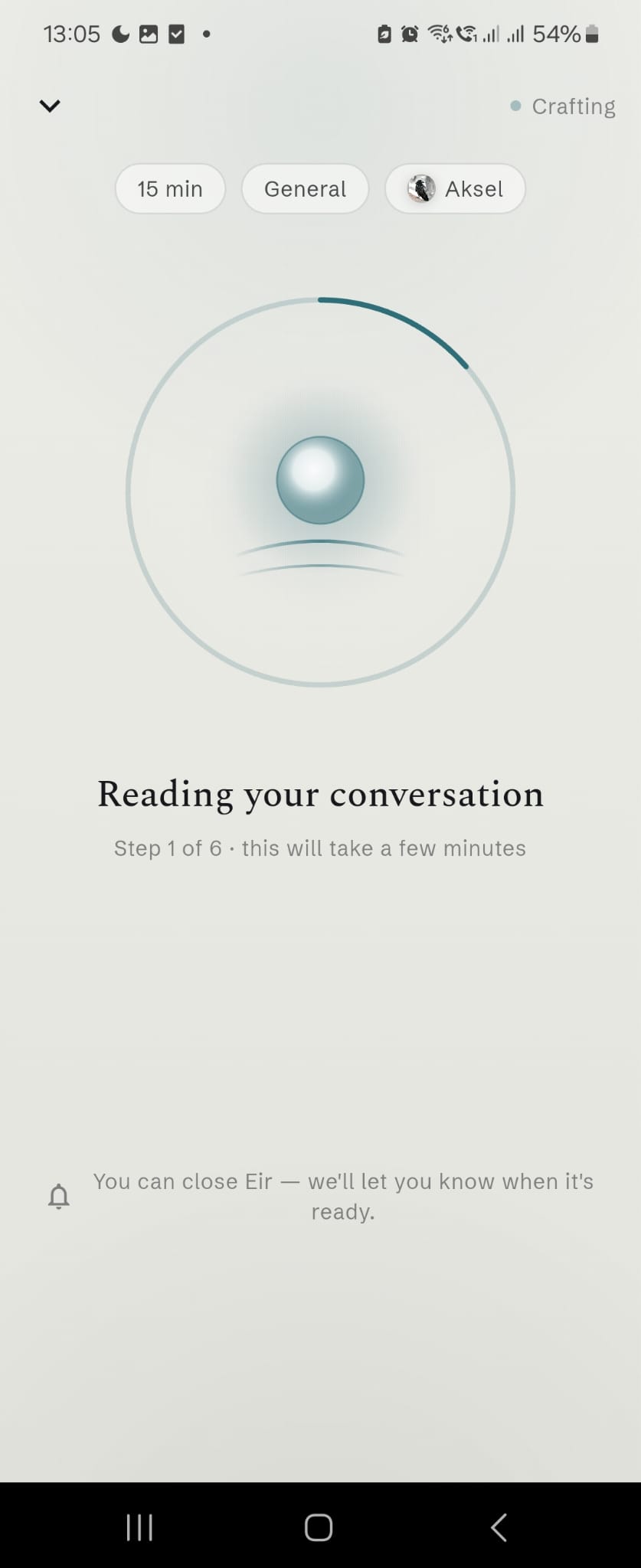
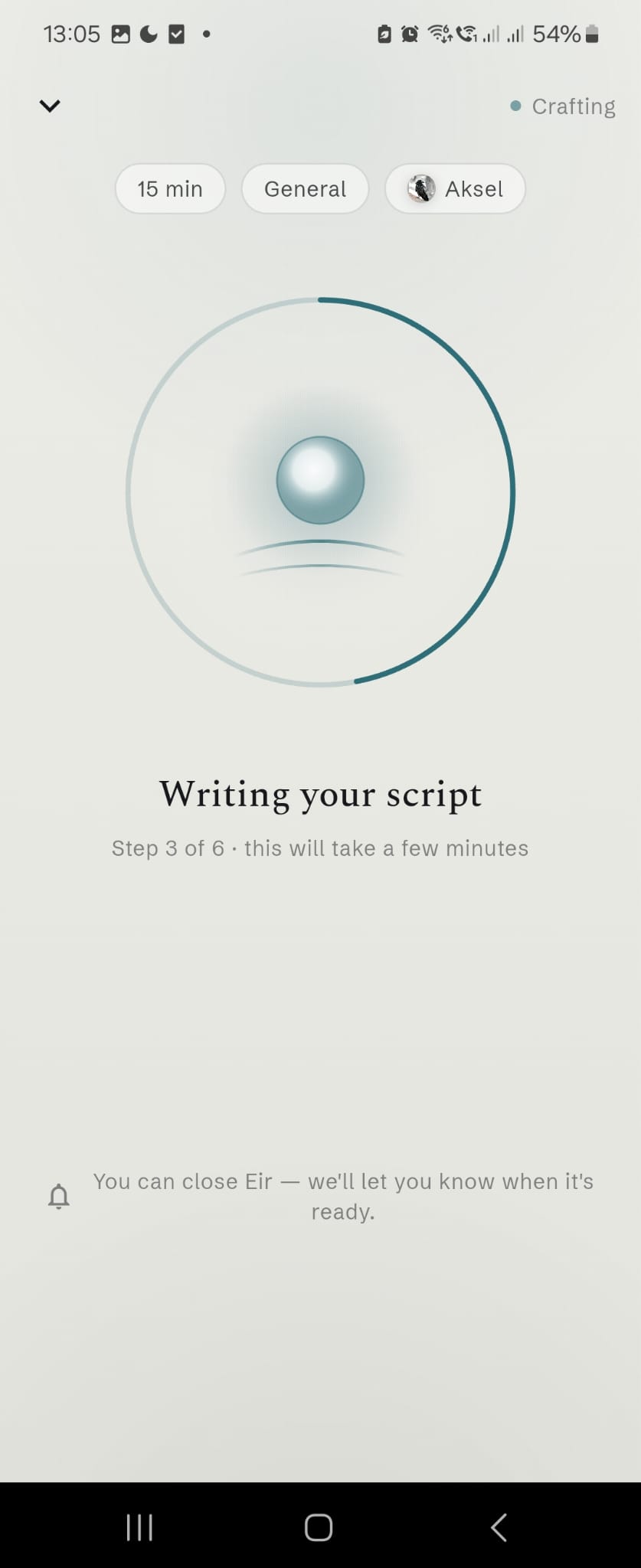
After that, relevant research findings, session goals, guide personality/approach information, target word count, and other data is used to generate a design document. This design document basically outlines how the script should be structured, how long each part should be, whether we should use a direct or permissive suggestion strategy, what kind of visuals the script should lean into, etc. The script is then generated based on this detailed design document. After the script is created, it goes through a repetition and safety evaluation. Which actually happens during the initial guide conversation as well - certain types of input will have the guide refuse to continue and redirect the user to a more appropriate channel.
Session narration
Once the script is done and validated, it’s sent to ElevenLabs for audio generation with their v3 model. Each guide has a custom voice with its own speed and other parameters configured as needed.
As you can imagine, this is not an instant process. A single session can currently take between 5-15 minutes to generate. I’ll go into how the process is implemented, and how generation is partly paralellized, in a future post.
Session playback
When a session is ready, I get a notification on my phone and can play it whenever I’m ready. All personally generated sessions are private. All transcripts for a session can be deleted on demand with or without the audio itself (so I can keep the meditation but delete the transcript, or delete everything). As a next step I want to encrypt the transcripts so that only the user who owns the device they were generated on can read them and not even I have access as the developer. I am still thinking through how this should work in terms of the user support requests and safety considerations.
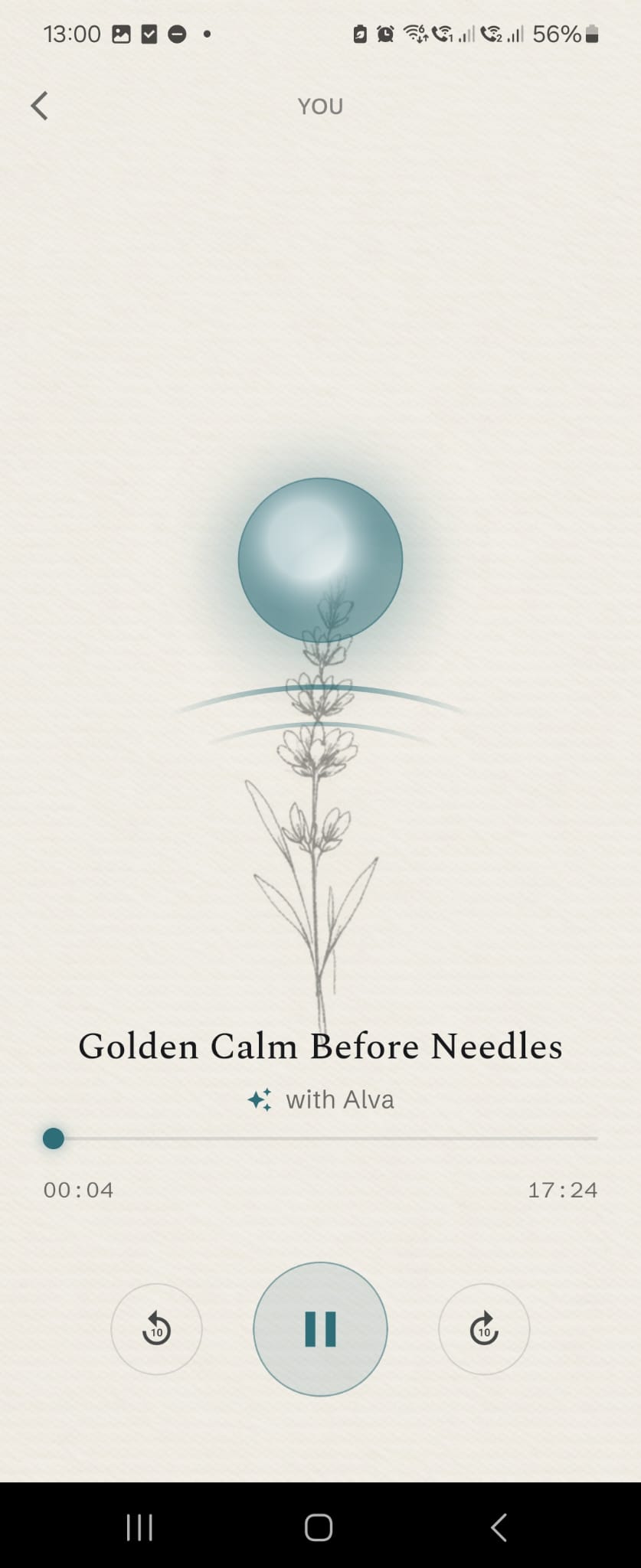
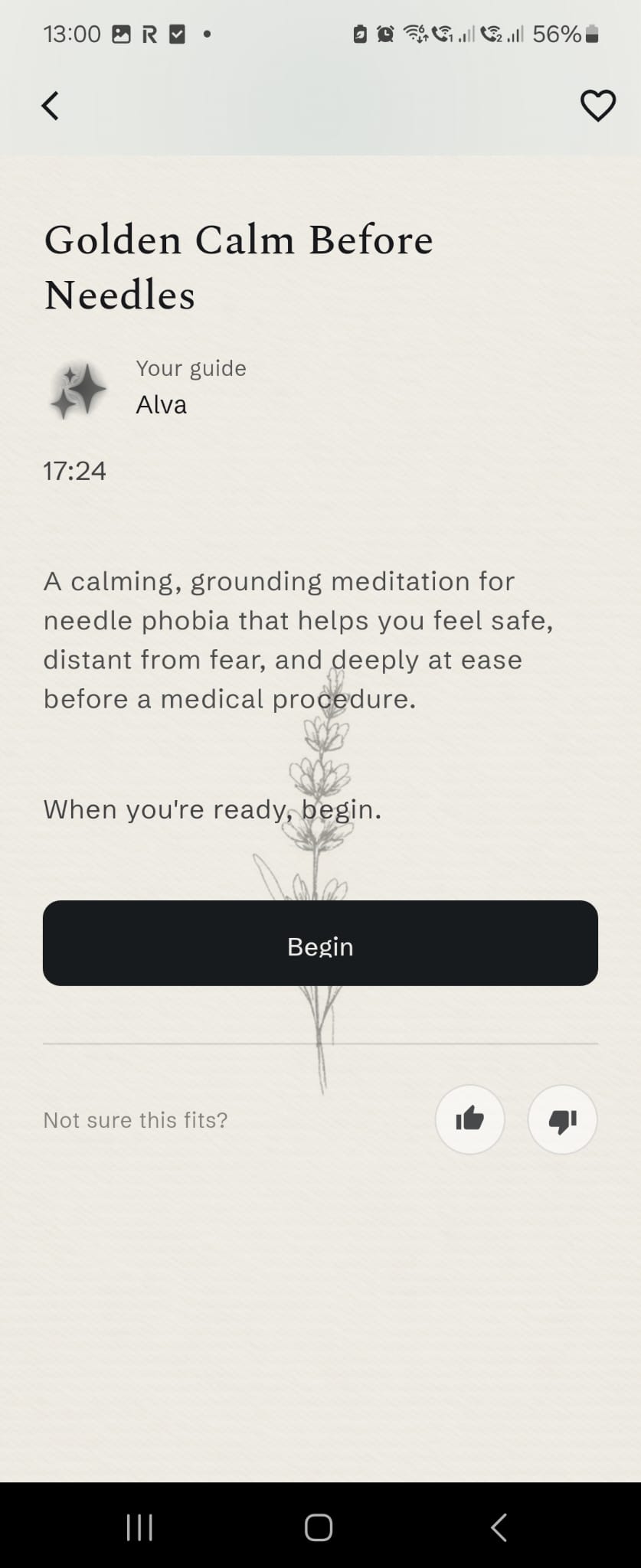
Users can also download their personal session files to their device at any time, so they can delete a meditation from my storage but still keep the file locally for personal use.
But does it work?!
The perceived effectiveness of each session depends on a few factor, not least being my state of mind and receptiveness at the time of listening. To me the experience feels… different. But as I said before - do not think of it as a hypnotic trance and won’t call it that. I think of it more as a guided meditation.
One thing I noticed anecdotcally is lingering effects of a final hypnotic suggestion at the end of a session. For example, one session instructed an image to appear in my mind whenever my thoughts wandered to a specific situation that I wanted to detach from. For weeks, whenever my mind would drift to that situation during the day, the given image would appear seemingly on its own. But was that a result of successful hypnotic suggestion or is it more me excitedly thinking about the app I’ve been building and then recalling the session as a result? No idea! I’ll need more testers to find out.
Either way it’s been a fun project both in terms of learning more about hypnosis and just from a technical standpoint, and I’m finding myself actually regularly using the thing I built for myself, which has been really satisfying.
Maybe in the next post I’ll dive a little deeper into the flow of transcript -> journal context -> design doc -> script through different OpenAI and Anthropic models to generate the final result.