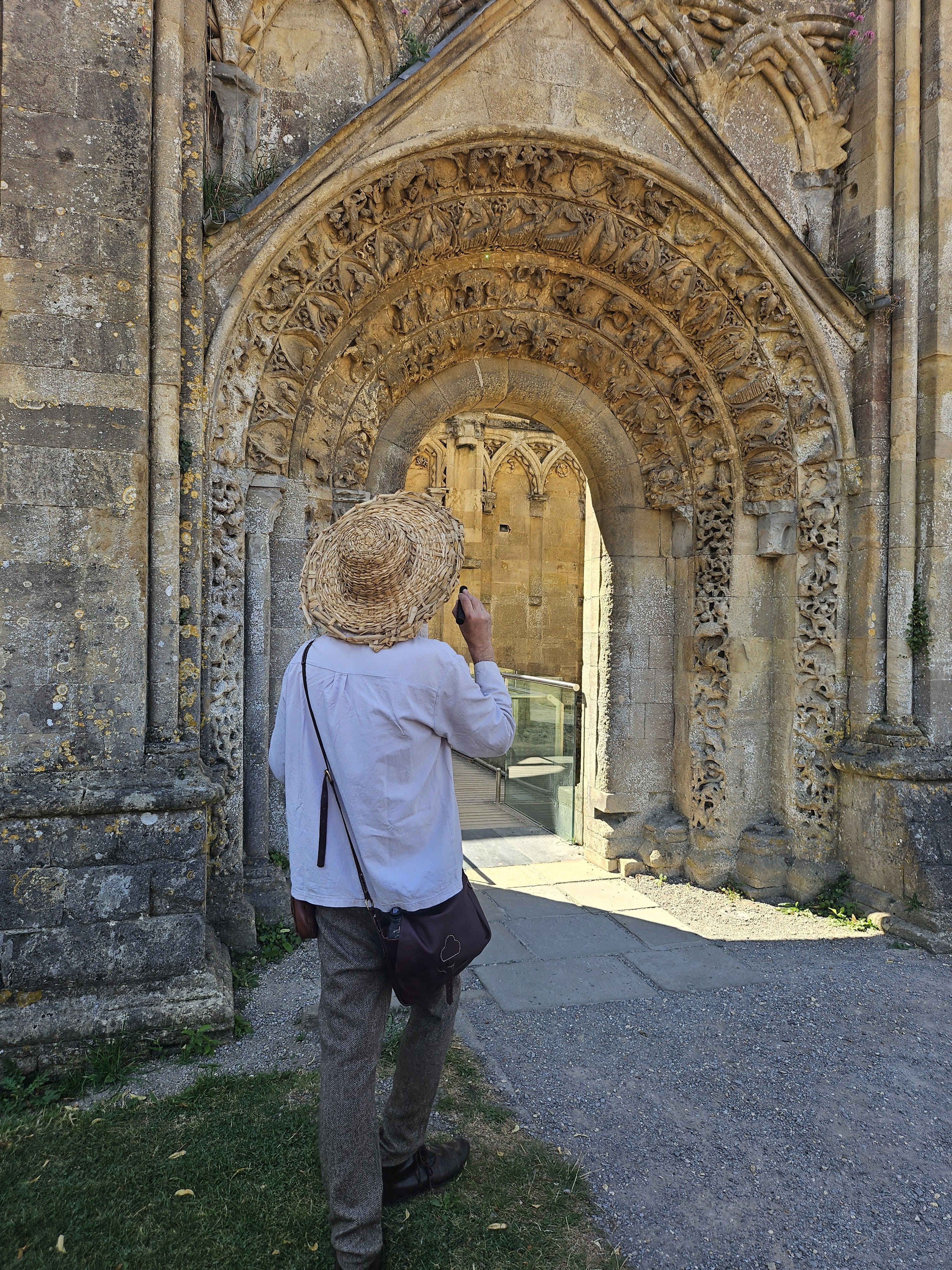
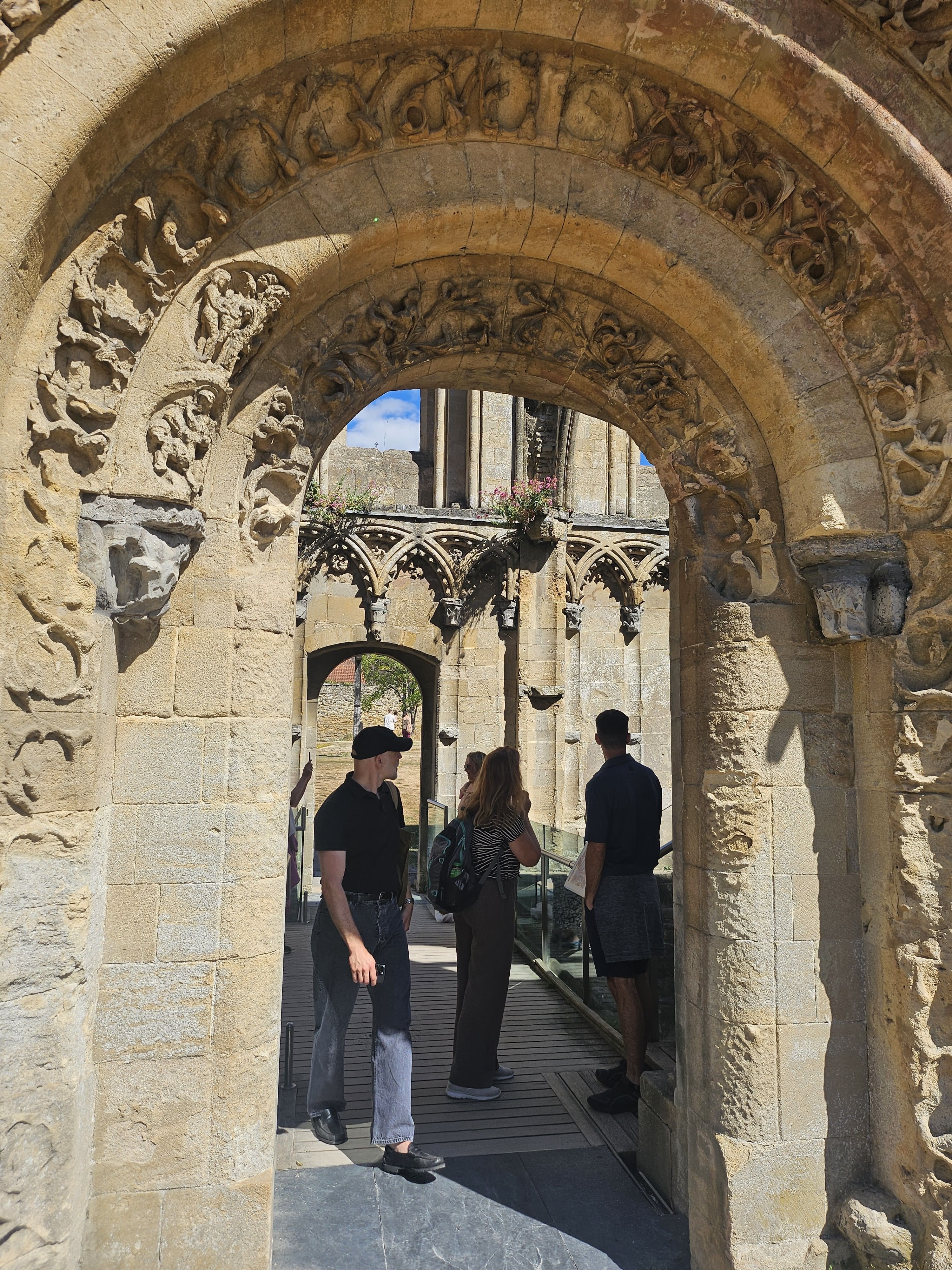
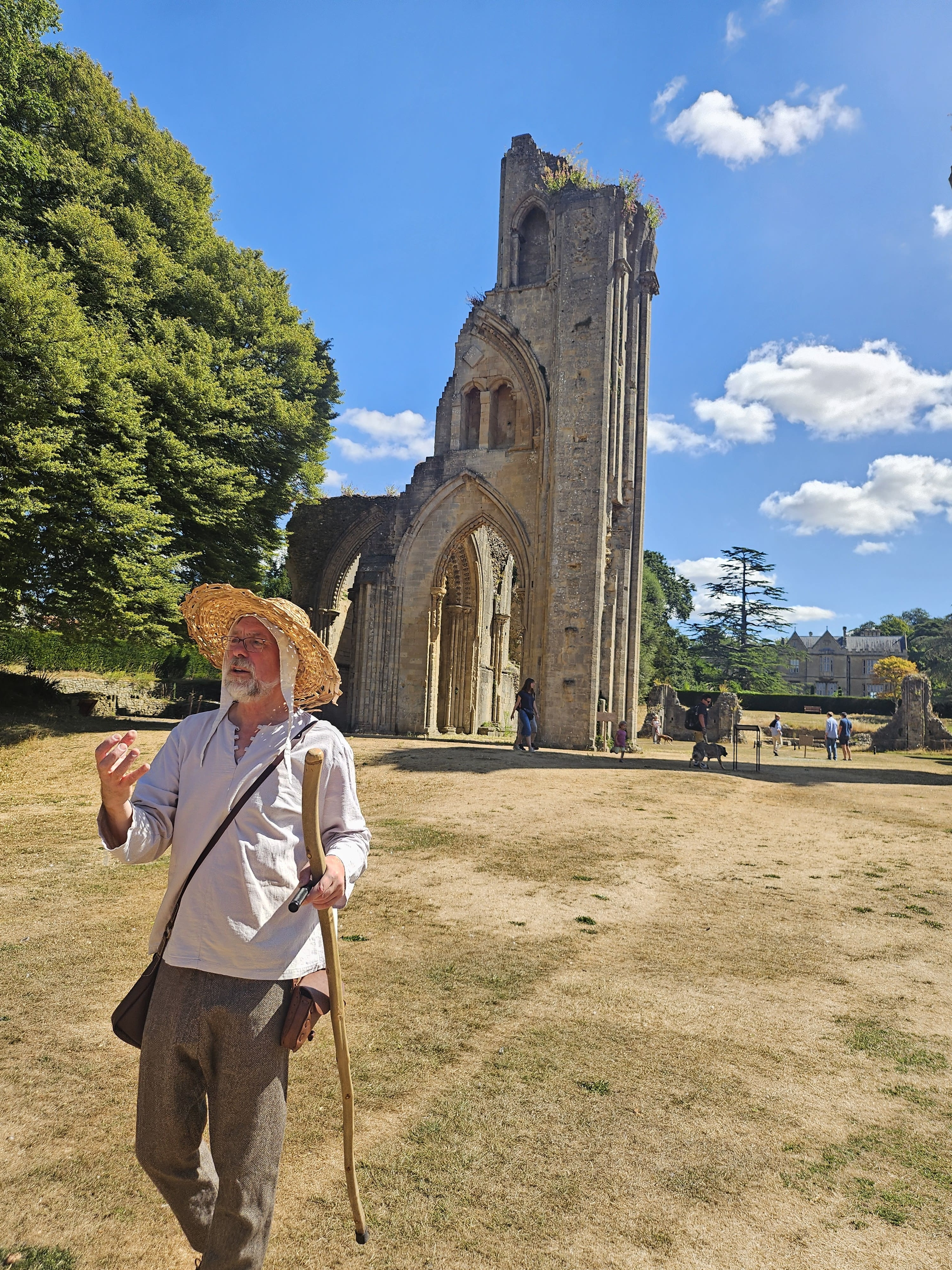
A few weeks, on a trip to Glastonbury, E and I went to a guided tour of the ancient abbey ruins. The tour was guided by Geoffrey the Carpenter, and these are my rough notes. There was a lot of information and it’s possible I got some of it wrong in my haste to write things down. Aside from that, this is the history of the abbey as told from the point of view of a carpenter in those days. I think Geoffrey might have taken some liberties with a few interpretations of the story, and some parts combine history and legend without fully delineating them.
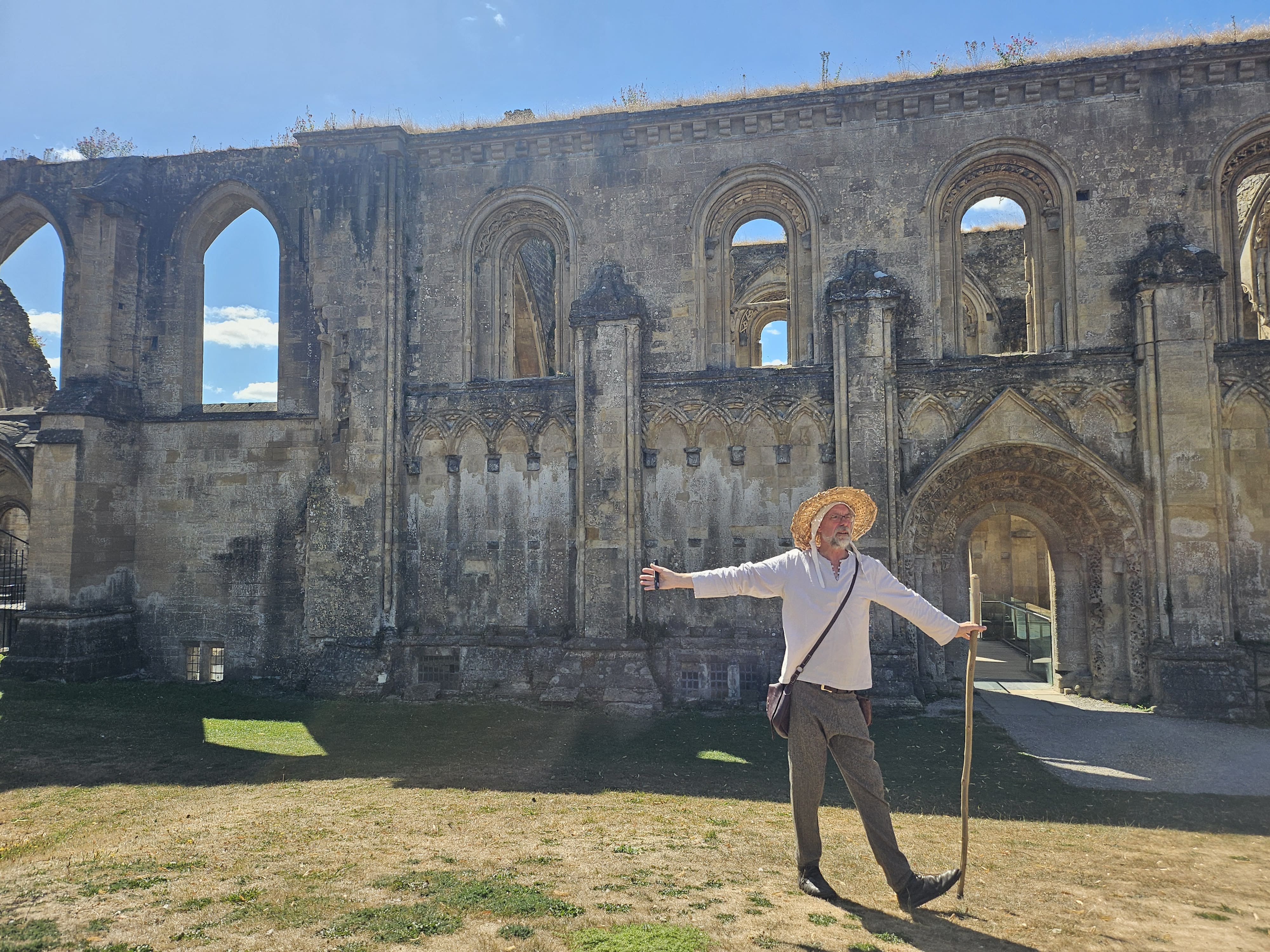
Glastonbury Abbey was opened in the 12th century and closed in 1539 on orders of King Henry VIII. [L: Confused about this in retrospect as others say the abbey was founded in 7th or 8th century?]
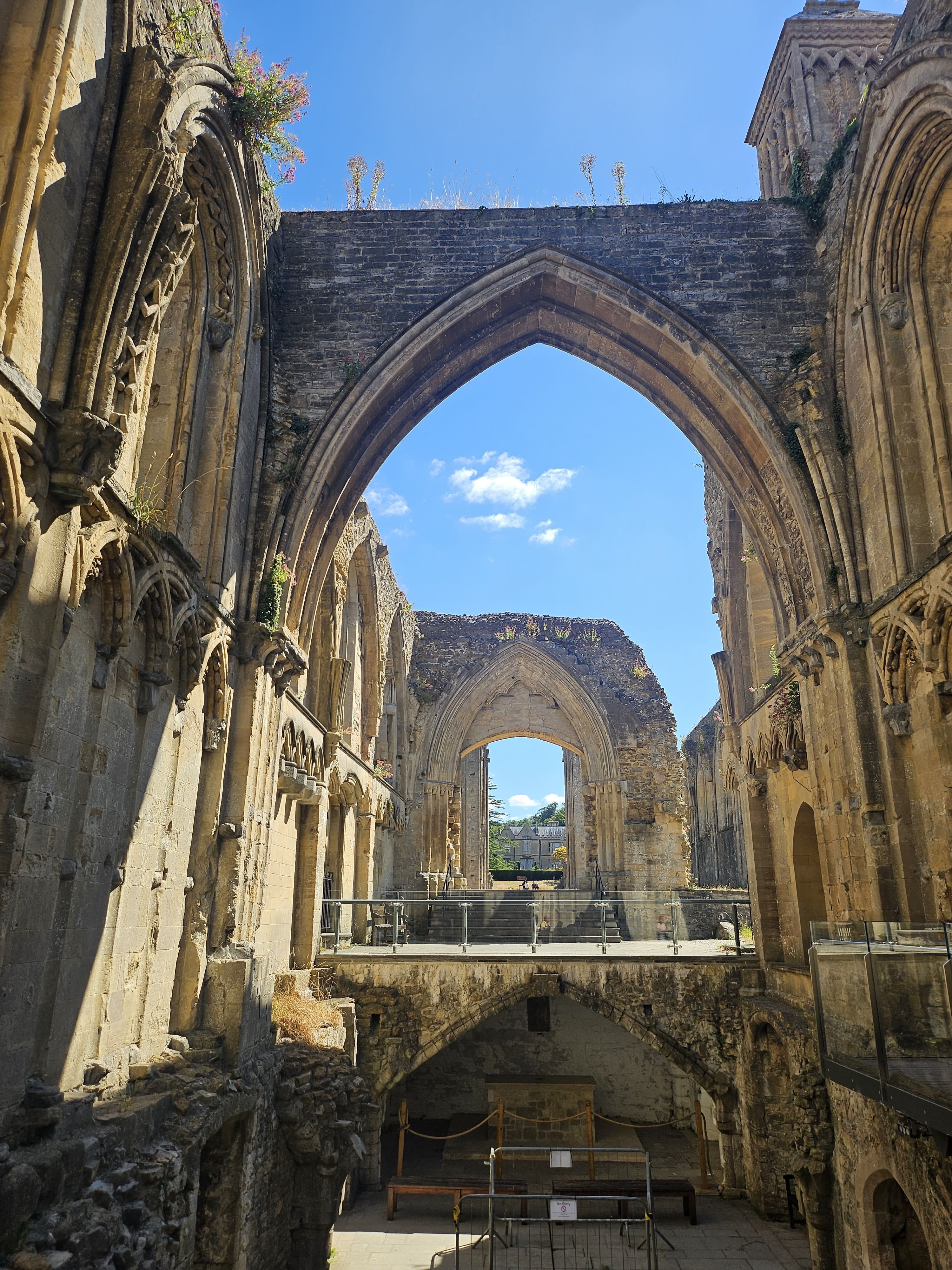
At 177 total meters, the abbey was the longest church in the land. It was arguably also the oldest church in the land, though this is disputed.
The first cloisters in the land were built at the abbey by Dunstan, who eventually became the archbishop of Canterbury.
The food
Glastonbury Abbey did great thing for pilgrims and the poor. The social care it provided was fantastic (note that this was the opinion of Geoffrey the Carpenter, who lived in those times). Geoffrey the Carpenter said the abbey had two bakeries - one for rich people, and one for poor people.
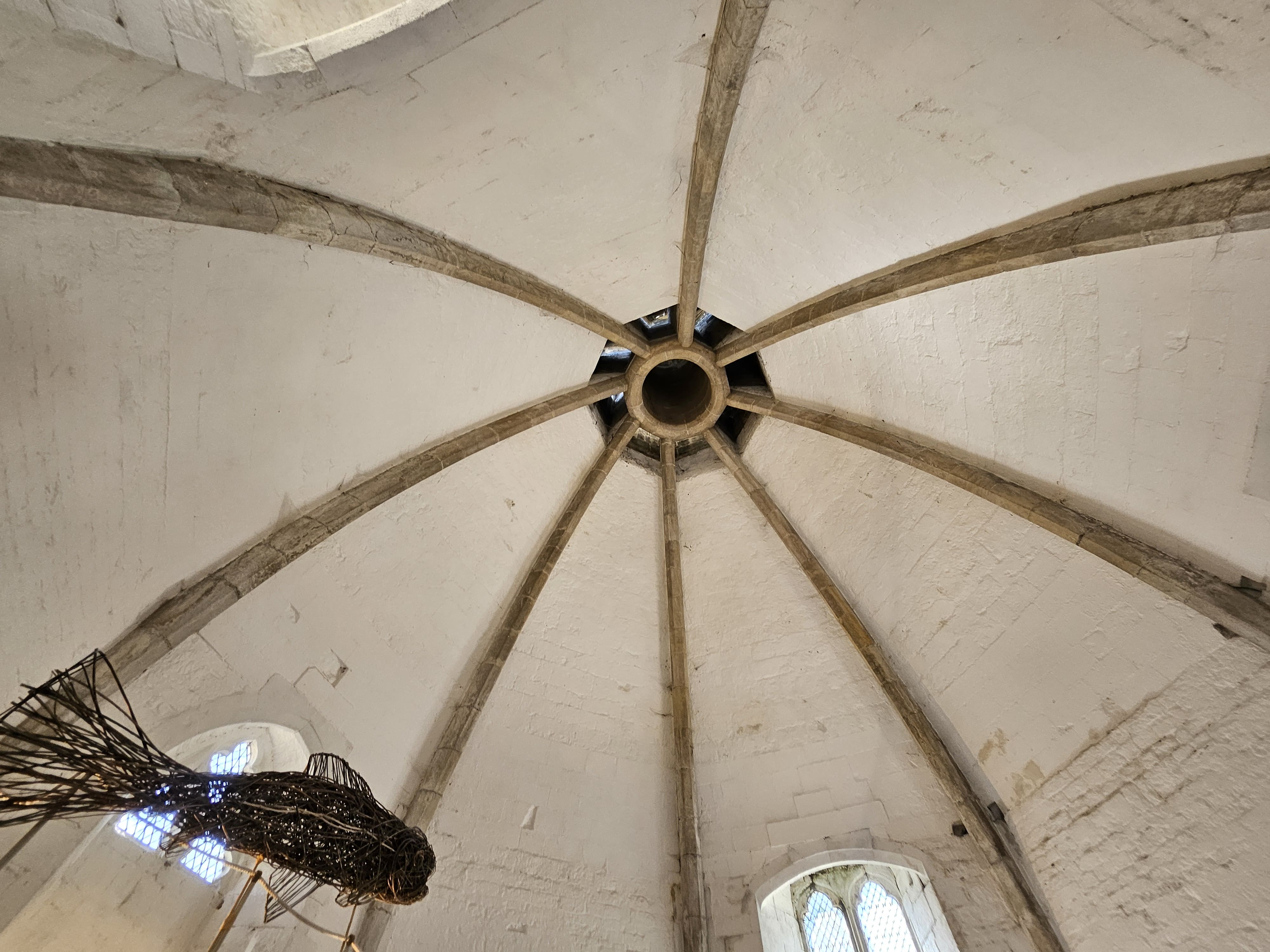
Only two kitchens like the one in Glastonbury Abbey are left in the world. It had the highest state of the art kitchen for the time, producing food for rich and noble guests, kings, and queens.
The wealth
At the point of closure, Glastonbury Abbey was pretty much the wealthiet abbey - it held more wealth and land than the king with all of it assets combined. WHen Henry VII stayed at the abbey in 1497, the abbey spent the modern equivalent of 1/3 million GBP for that one night.
First church in the land?
Legend goes that two thousand years ago, Joseph of Arimathea - Jesus’ uncle - sails to Glastonbury. Supposedly, he’s been to Glastonbury twice. Once when Jesus was five years old, and another time after Jesus’ death. The story goes that the second time Joseph visited, he sailed with a cup from the last supper, containing Jesus’ blood, sweat, and tears. He hid it around the Tor.
Now, Geoffrey the Carpenter doesn’t put much stock in this particular story. However, some believe that the Phoenicians had likely come to Glastonbury after tin, and that Joseph may have followed in their trade footsteps, coming to Glastonbury for tin and lead.
The legend goes that Joseph planted his staff in the ground. The staff took root and grew into a tree. A miracle! This inspired them to walk down and build the first wooden church at Glastonbury. This was the start of the legend of the Holy Thorn. There is a unique variety of Hawthorn in Glastonbury that comes from the holy land. It blossoms twice a year - at Easter, and at Christmas of the old calendar.
The rebellion of the monks
When William the Bastard came to Glastonbury, the church was remodelled into being Norman. The monks rebelled when they were ordered to do Norman services. They refused, and Abbot Thurston, put in place by William, ordered in the troops. The monks gathered in the church building and barricaded the door. Many monks were seriously wounded, and three died. At that point the monks said: “Ok cool yeah being Norman won’t be so bad!”
Glastonbury as the base of power
On St. Urbans Day in 1184, a great fire burned down the entire abbey. They lost everything and began to rebuild with money given to them by King Henry II.
The rebuild was lavish. Everything inside the church was painted, and what’s more - you can still see the blue paint remnants on the stone. An object painted blue was made from lapis lazuli from north-eastern Afghanistan. It was very hard to get the blue color out of this stone, and it cost more than gold. The entire ceiling in the rebuilt abbey was painted blue with gold stars.
The rebuild of the Lady Chapel took two years. In 1189, they ran out of money and had to go to the king to ask for more. At that point, Richard I was on the throne. Richard I does not speak or like English - he’s busy fighting the holy wars. So Glastonbury Abbey gets no money. It takes 150 years to complete the rebuild of the abbey.
Finding Arthur and Guinevere
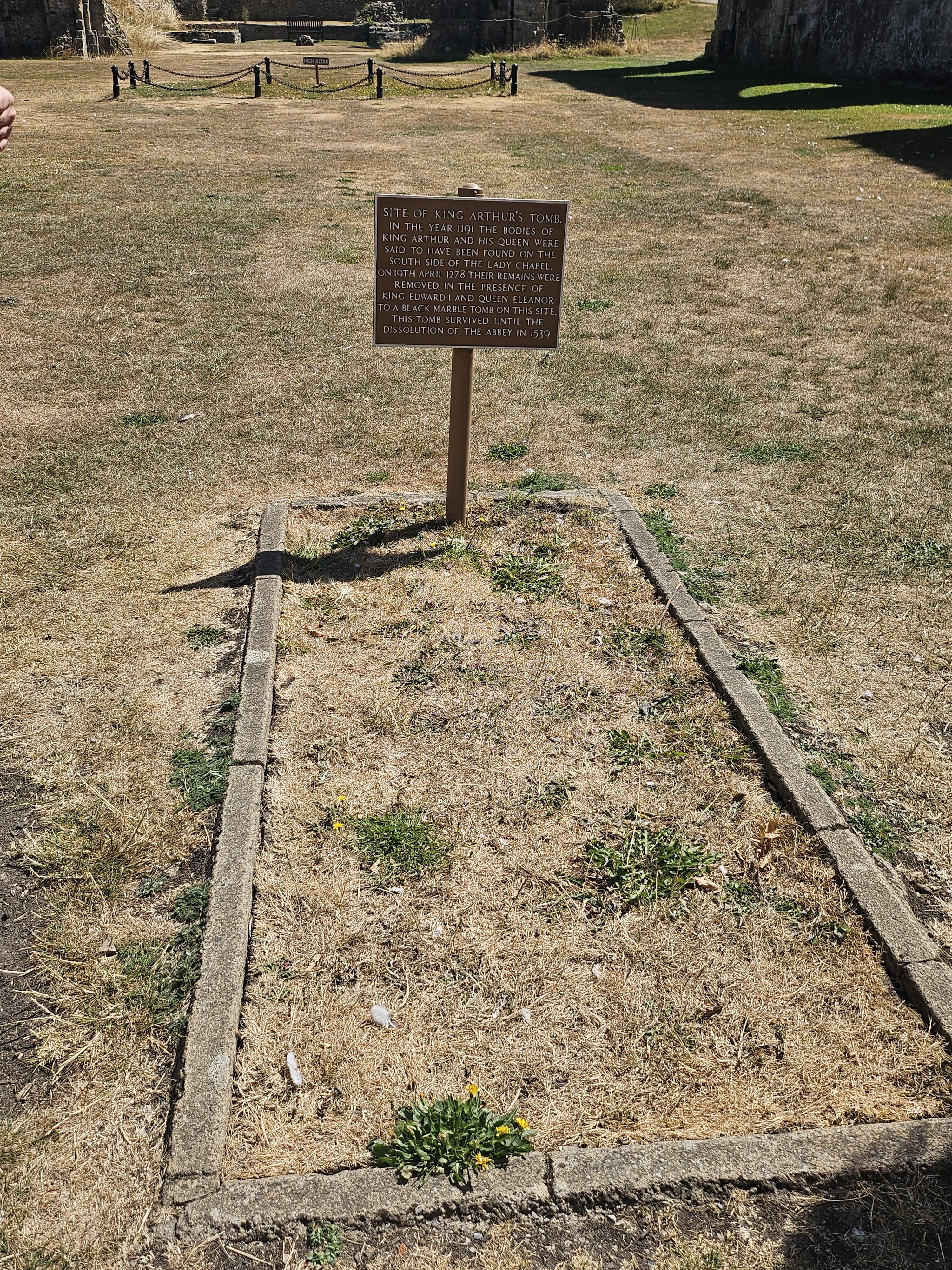
In a 1191 excavation of the cemetery at Glastonbury Abbey, monks were said to have found tombs of King Arthur and Queen Guinevere. They found a grave in a hollow oak between two beautifully carved Celtic grave marks, and a lead cross inscribed in Latin which said “Here lies buried the renowned King Arthur, with Guinevere his second wife, in the Isle of Avalon.”
The French went crazy. Arthur was kind of a big deal around there. The French Queen wants to believe she’s related to Queen Guinevere. Everyone wants to know - is it really them?!
The monks remove the lid to find a Celtic warrior skeleton, wounded, with a hole in the skull. The other skeleton is a woman. Gerald - a sort of journalist at the time - writes that her beautiful golden hair is still attached to her skull! A monk was said to have jumped down to embrace her, at which point the hair disintegrated.
The legend says that one day King Arthur would awaken to save the Britons. Edward I does not like that. He says Arthur is his great great great great grandfather, removes the skeleton remains from the original tomb and re-buries them in another marble tomb, showing the Welsh that Arthur is dead, not waking up, and Edward I is his successor.
The beef between Glastonbury and Canterbury
So Glastonbury Abbey claimed to have had over 300 holy items. Saint bones and such. This was more than Canterbury, and it causes huge jealousy. More stuff means more pilgrims! And more money. The floor is all tiled! The tiles are made on-site!
Three Saxon kings were entombed in Glastonbury: Edmund I, Edgar I, and Edmund II Ironside.
The abbey holds eight services a day. Inside the church there were no seats of pews - everyone was to stand. The old and infirm are an exception. They get to sit on a sort of bench next to the wall. All healthy attendees remain standing.
The divorce rampage and closure of abbeys and monasteries
In 1530, there were over 800 monasteries and abbeys in the land. By 1541, not one survived except Westminster.
A few years before, Henry VIII tried to divorce Catherine of Aragon because she had not produced a male heir. He asked the pope for permission to do so, but the pope said no. In 1534, Henry decided that if you make yourself head of the church then the issue goes away - you can give yourself permission to divorce. Everyone was furious, the French on the point of invasion, and Henry didn’t have enough money to handle that.
But churches had money… He starts closing monasteries and abbeys to take their wealth. Glastonbury held out, so Henry sent inquisitors. They said that Glastonbury is doing just dandy, and in 1539 Henry’s patience ran out - he sends soldiers. They grab the Glastonbury abbot and take him to the tower of London. The abbot is accused of theft while they also look for writings against the king (and find none).
The abbot is tried in a sham trial at Bishop’s Court, and found guilty of theft. He is taken publicly up High Street onto the Tor, to St Michael’s church, and hung, drawn, and quartered publicly. He is said to have remained conscious and calm through the entire process. His head it chopped off and placed on a pike.
At that point, Glastonbury Abbey was closed and stripped of anything of value. Nearby Wells Road allegedly contains Abbey stone. In 1820-ish, stones from the abbey were still being blasted for plunder.
Private ownership
In 1907, Glastonbury Abbey was auctioned off. In 1963 the abbey became a private charity.